In short: making teak furniture in an Indonesian factory takes nine broad steps: selecting logs, sawing them into boards, kiln-drying the timber, machining the parts, cutting the joints, assembling, hand-sanding and finishing, adding upholstery or stone, and a final quality check before export packing. Drying and finishing take the longest, and they have the biggest effect on how long the piece will last.
Buyers often ask what really happens between a teak log and the chair that arrives at their door. Here is how the process works in a teak furniture factory in Indonesia, with notes on how we approach each stage at our workshop in Jepara.
1. Selecting the logs
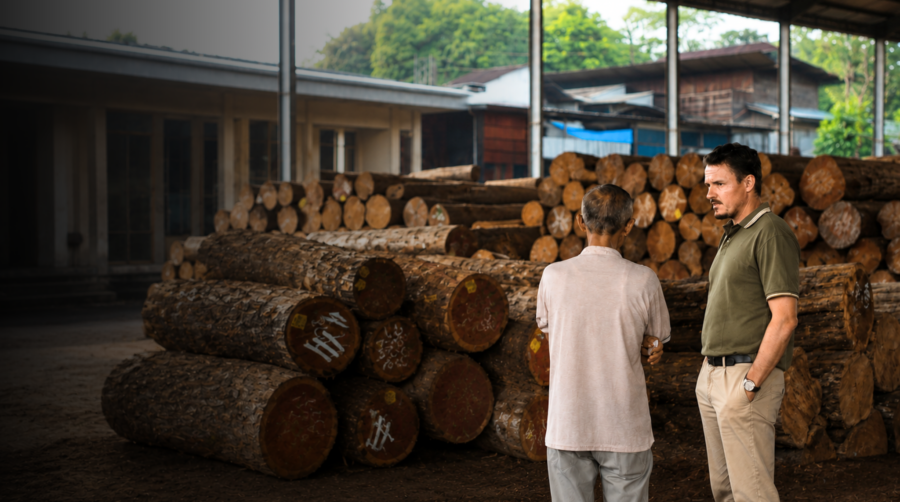
Good furniture starts with good timber. Logs are graded by diameter, straightness and how much dense, golden heartwood they contain compared with paler sapwood. Heartwood carries teak’s natural oils, which make it resistant to water, rot and insects, so it goes into the most exposed parts of a piece.
2. Sawing and grading boards
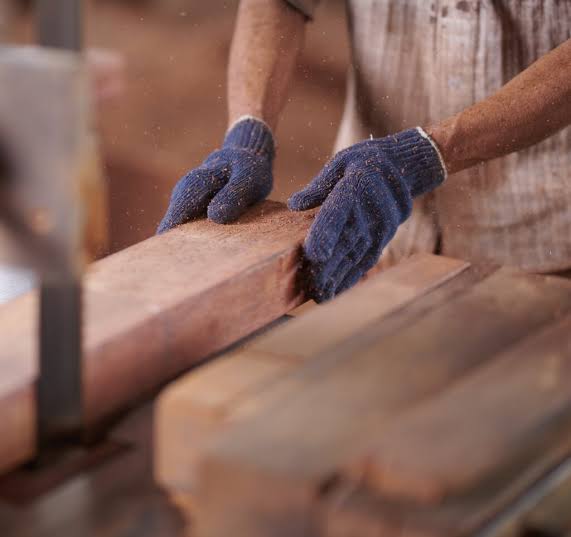
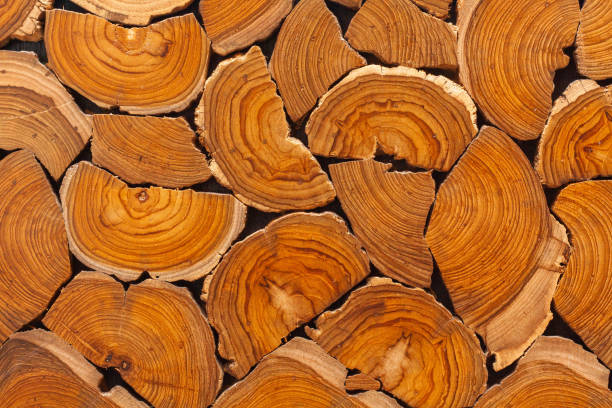
Logs are sawn into planks and graded again. Boards with knots or defects in the wrong place are set aside for hidden parts or smaller components, and the best grain is kept for table tops, arms and anything you see and touch.
3. Kiln drying
Freshly sawn teak holds a lot of water. If it is not dried properly, furniture can crack, warp or open at the joints once it reaches a drier climate or an air-conditioned room. Export furniture is usually dried to a moisture content of roughly 8–12%. We dry all our wood in house, controlling temperature and moisture in the chambers closely. It is one of the most important steps for long-term performance.
4. Machining the components
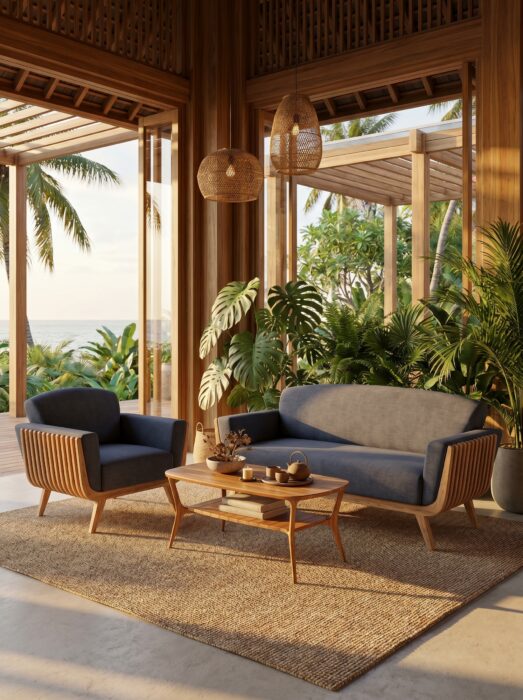
The dried boards are planed, cut to size and shaped into legs, rails, slats and panels. Curved parts, such as the sculpted frame of a lounge chair, are cut from templates and refined by hand.
5. Joinery
Solid teak furniture relies on proper wood joints, mainly mortise-and-tenon joints and dowels, glued and pinned where needed. Well-cut joinery is what lets a dining chair take years of daily use or a sun lounger survive a resort pool deck.
6. Assembly and hand sanding
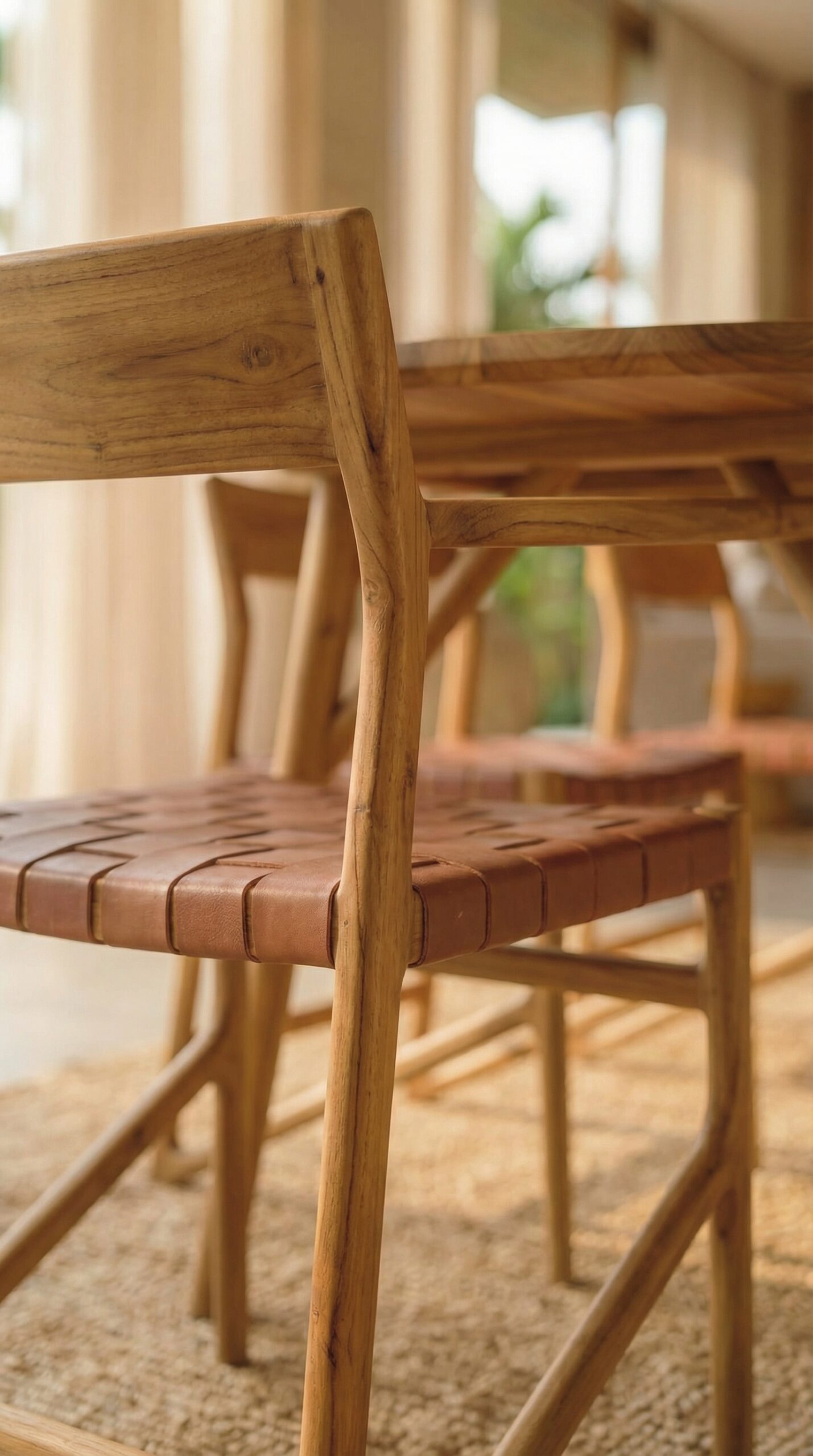
Parts are dry-fitted, assembled and then sanded by hand in progressively finer grits. At Indocasa every surface is sanded and finished by hand, which keeps the natural warmth and texture of the wood rather than flattening it under a heavy coating.
7. Finishing
Indoor pieces are finished to bring out the grain and protect against daily wear. Outdoor teak is often left natural so it can weather to a soft silver-grey, or given a finish that slows that change. The right choice depends on where the furniture will live and the look you want.
8. Upholstery, stone and fittings
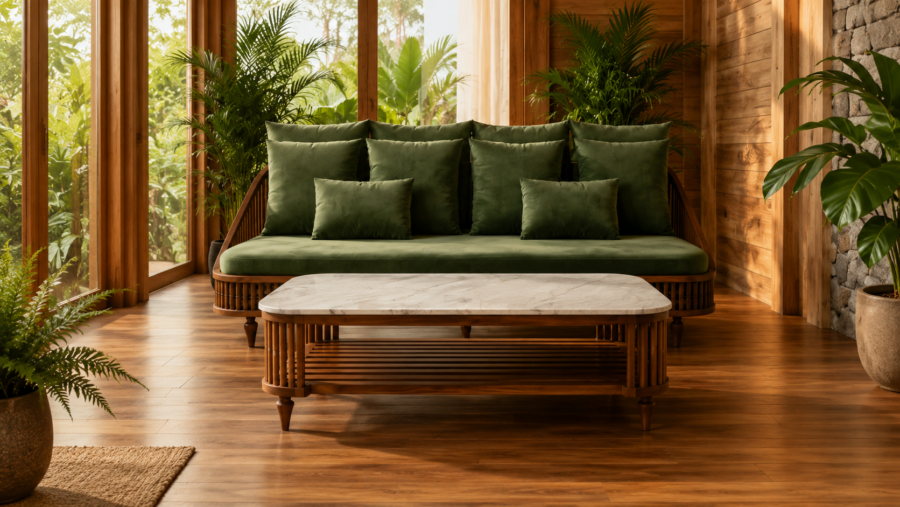
Many pieces combine teak with other materials: cushions on lounge sets, natural stone basins on bathroom vanities, woven cane panels, marble tops or metal legs. These are fitted and checked at the end of production.
9. Quality control and export packing
Each finished piece is inspected for structure, finish, dimensions and moisture before it is wrapped, protected at the corners and packed for container shipping. Our guide to how an export order works covers what happens after the factory gate.
Want to see it for yourself? Our Jepara showroom sits beside the workshop and is open Monday to Friday.
Frequently asked questions
Why does teak need to be kiln-dried?
Kiln drying brings the timber down to a stable moisture content, usually around 8–12% for export furniture. Without it, teak can shrink, crack or loosen at the joints when it moves to a drier climate or an air-conditioned interior.
What is the difference between teak heartwood and sapwood?
Heartwood is the dense, golden-brown core of the tree and holds the natural oils that make teak durable. Sapwood is the paler outer layer and is less resistant to moisture and insects. Better furniture uses mostly heartwood, especially in exposed parts.
How long does it take to make a teak furniture order?
It depends on the pieces, the quantities and any customisation. We confirm a production schedule with every quotation, and prototypes for bespoke designs are agreed before full production starts.
Can I visit the factory in Jepara?
Yes. Our Jepara showroom is beside the workshop and is open Monday to Friday, 08:00–17:00. Contact us beforehand so the right person can show you around.